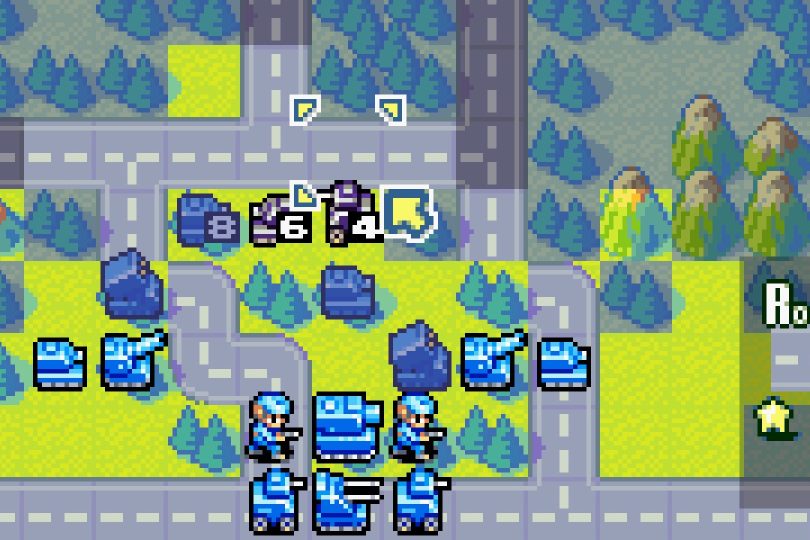
The commercial, cultural, and ludic economics of games have played out between the tabletop roleplaying and wargames and their more successful digital cousins over the past forty years or so. In this sense, we might state that roleplaying and wargaming have, at the risk of oxymoron, always been postdigital. Early computer games adapted the rule-based models and quantitative mechanics of analogue games, which in turn became more complex in their mobilisation of variables as a response in part to the dynamic simulations of videogames. Dramatic worlds, characters, and IP flow across both forms, with numerous Warhammer and 40K digital games for instance. Tabletop roleplaying is now as likely to be conducted by remote players via the internet, and augmented by digital adaptations of dice-rolling and character information records.
We might also see in the play and craft communities of Games Workshop a prefiguring of contemporary internet ‘gift’ economies and as such feeding into the business models of attention and microtransaction that underpins commercial network culture today. Players and producers of massively multiplayer online games (MMOs) and multiplayer online battle arena games (MOBAs)—game forms themselves that owe a great deal to fantasy roleplaying and wargames respectively—interact through a similar negotiation of commercial demand and community belonging. Dedicated players of a particular game, the free-to-play League of Legends for example, might buy skins – adaptations to their ‘champion’s’ appearance in the game – to signal their identification with and commitment to the game and its online community as a fan, or even with a sense of ‘giving back’ to the producers.[i] The augmentation of design of ‘miniature’ figures or tokens that has no material or mechanical effect on the game itself but resonates with analogue craft practices, player/producer community and culture.
The varying relationship or interplay between the child’s set of toy soldiers and games with it and the serious, but still ludic, deployment of similar tokens in the wargames of military leaders is a significant example of the toyetic at work. Each is a simulation of sorts, a simulation of different kinds of warfare, for different ends and in a different register of imaginative activity. The child mobilises the toy figures and weapons as if they were alive and engaged in a real war, in the here and now, a story emerging from the animation of toys by the hand and mind. In this the toy soldier is continuous with other figurative toys, the teddy bear or doll played with as if they had personalities and desires, the miniature car that moves and crashes as if it were an actual vehicle. But even within the serious applications the mechanics of gameplay as a model or simulation were evident. Hellwig’s game included some historically and physically inaccurate relationships, for instance the relationship between the distance that infantry could travel in a day and the firing range of artillery. In Kriegsspiel this was 4:3, meaning the firing range was much further than on an actual battlefield – it was however considered by Hellwig to be essential to balance gameplay:
Here, at the dawn of wargames, Hellwig discovered the trade-off between realism and playability, which history bore out to be among the most fundamental choices in wargame design.[ii]
Other games, for an adult and older child market, accentuate the fantastical as-if imaginative move, but with a strict rule-bound and internally consistent what if? architecture and storyworld. Adam Chapman cites the zombie mode in the Call of Duty series of historical and contemporary themed first-person shooter videogames as an example of the eruption of “the pseudo, the alternative, the fictional, and the fantastic” in historical games. Recent iterations of the Wolfensteinseries are set in an alternate history in which the Nazis prevailed in World War II, and though populated with supernatural entities and robots, it, Chapman argues, “remains grounded in history [and] displays preoccupation with authentic modelling of historical material culture.”[iii]
[This is taken from the first draft of Toy Theory: technology and imagination in play (MIT Press 2024) – I had to cut 30,000 words and this didn’t make the final version]
[i] Josh Jarrett, “Gaming the Gift: the affective language of League of Legends’ “fair” free-to-play model.” Journal of Consumer Culture, 21, no.1 (2021): 102-119.
[ii] Jon Peterson, “A Game out of All Proportions: how a hobby miniaturized war,” in Zones of Control: perspectives on wargaming, (Cambridge MA: MIT Press ), 6.
[iii] Adam Chapman, “Playing the Historical Fantastic: Zombies, Mecha-Nazis and Making Meaning About the Past Through Metaphor,” in War Games: Memory, Militarism and the Subject of Play, ed. Philip Hammond and Holger Pötzsch (New York: Bloomsbury 2020), 95.